
Start with the routine, not the shopping list: home utility products by room should solve a repeated task, reduce a failed handoff, or make a safety requirement easier to meet. Map what happens, where materials wait, and what interrupts the work before deciding whether a new product belongs in the room. This approach keeps useful zones small, flexible, and easier to maintain.

Table of Contents
- Start with the task
- Map zones and handoffs
- Assign capabilities before products
- Apply the method by room
- Decide what stays shared
- Use evidence to narrow product choices
- Create a small plan
- Limitations and uncertainty
- Frequently Asked Questions
- Conclusion
Start with the task
Record the friction
Look for visible signals rather than assuming a product will help. Repeated trips, items placed on the wrong surface, supplies stored behind unrelated objects, or a safety check that is easy to skip are all observations worth recording.
Convert the task into constraints
Constraints make a vague need more precise. Record available space, access, cleaning requirements, heat or moisture exposure, portability, storage height, household-specific needs, and whether the item must remain ready for immediate use.
Separate a required constraint from a preference. “Must fit the existing shelf” can eliminate unsuitable product families, while “would look better in one color” may be useful later but should not drive the first decision.
Map zones and handoffs
Follow one routine across boundaries
Trace the full path of a routine from its starting point to its reset point. For laundry, that may mean collecting clothing, sorting it, washing, drying, folding, storing, and handling items that need another treatment.
Mark every handoff where an item changes person, surface, room, or state. If the same basket must serve collection, clean transport, and storage, the issue may be a capacity or timing constraint rather than proof that three baskets are needed.
Place access where the work occurs
Local placement is useful when a tool is used frequently, is awkward to carry, or supports a safety-sensitive step. Shared placement may be better when the item is used occasionally, takes up substantial space, or needs maintenance in one controlled location.
An item should not be stored at the point of use if that location creates a new obstruction or makes cleaning harder. The goal is a reliable handoff, not maximum proximity to every task.
Assign capabilities before products
A capability describes what must happen, without naming a product. Examples include verifying a condition, containing loose items, supporting a hot object, separating clean and dirty materials, making a spill removable, or keeping emergency supplies together.
Write the capability as a short verb phrase. “Verify internal temperature” is more useful than “buy a thermometer,” because the former leaves room to compare product families and confirms that the tool addresses the actual task.
Identify the minimum useful capability
Ask what would make the routine complete and repeatable. If the problem is uncertainty about whether food has reached a safe internal temperature, appearance alone is not a reliable indicator; the USDA explains that a food thermometer is the reliable way to verify safe minimum internal temperature in its Food Thermometers guidance.
That evidence supports the capability of verification, not a universal claim about a particular model or a reason to purchase several thermometers. The remaining constraints still come from the household, including where the tool will be used, cleaned, stored, and checked.
Distinguish shared tools from duplicates
List what is already owned before adding anything. Then compare the tool’s locations, frequency of use, transport burden, and reset requirements to determine whether moving it is practical.
Apply the method by room
The phrase home utility products by room is most useful when it describes a decision structure rather than a catalog of objects. Each room can be reviewed for the same questions—what happens here, what crosses the boundary, what capability is missing, and what evidence supports the next step—without forcing identical zones into every space.
Kitchen and dining
Begin with preparation, cooking, serving, cleanup, and food storage as connected stages. Note where ingredients, cookware, dishes, waste, and cleaning materials move, then identify whether the difficulty is access, separation, verification, containment, or reset.
A food-safety capability should be based on the relevant evidence rather than visual confidence. For appliance-specific decisions, a focused air fryer finder or air fryer guide can be a later research step, after the cooking task and constraints are clear.
Use the kitchen utility category when the missing capability belongs to preparation or cooking support. It should not replace the room map; it is a place to continue product research after the need has been bounded.
Laundry and cleaning
Laundry and cleaning often share supplies, but their routines may have different timing and contamination boundaries. Map collection, treatment, washing, drying, folding, disposal, and storage separately enough to see where clean and dirty materials could be confused.
A cleaning zone benefits from direct access to the items used most often, while occasional supplies can remain in a controlled shared location. The cleaning utility category is a useful next research area when the missing capability concerns removal, containment, or maintenance rather than decoration.

Entry, maintenance, and safety
An entry zone can support arrival, departure, package handling, footwear, keys, and a short reset. A maintenance zone may instead need tools, replacement materials, protective equipment, or a way to keep an unfinished task visible without spreading it across the home.
Preparedness deserves a defined scope. Ready.gov’s emergency kit guidance lists basic emergency supplies and recommends considering household-specific needs; use it to frame preparedness planning, not as an endorsement of particular products or a complete room-by-room shopping list.
Decide what stays shared
Shared items work when ownership, location, and return steps are obvious. Record the item’s home, the rooms that use it, the person responsible for returning it, and the condition in which it should be stored.
Use a duplicate threshold
Set a decision rule before browsing products. For example, consider a duplicate only after observing repeated interference, a meaningful access problem, or a requirement that cannot be met by moving the shared item.
This threshold is not a universal formula. It is a way to make the purchase explainable and reversible: if the routine changes, the household should know why the item was added and where it can be reassigned.
Keep the reset visible
Choose the smallest reset that protects the next use. Complex maintenance instructions may be appropriate for some items, but they should be treated as a constraint during selection rather than discovered after purchase.
Use evidence to narrow product choices
Once the capability and constraints are written, choose a product family rather than a specific item. Possible families might include measuring tools, storage containers, organizers, protective equipment, cleaning tools, or appliance categories, depending on the task.
Then separate verified facts from assumptions. A source may establish that a capability matters or that a product has qualified for a label, but it may not establish that every option performs equally well, fits a particular room, or suits every household.
Check claims at the right level
The EPA maintains a searchable list of products qualified to carry the Safer Choice label through its Safer Choice Products database. That source can help verify whether a product appears in the qualified list, but it does not by itself prove that the product is the best fit for a room, routine, budget, or storage constraint.
Keep the evidence claim narrow. If the evidence supports a label, state the label; if it supports a safety capability, state the capability; do not convert either into an unsupported performance guarantee.
Route the gap to a focused list
This makes [household products for every room] a planning problem with boundaries rather than an invitation to accumulate. The home-organization category can support the next stage when the missing capability concerns placement, grouping, or reset.
Create a small plan
Start with one routine and no more than a few related capabilities. Write the current path, the failed handoff, the proposed zone, the shared-versus-local decision, and the evidence or uncertainty attached to the product family.
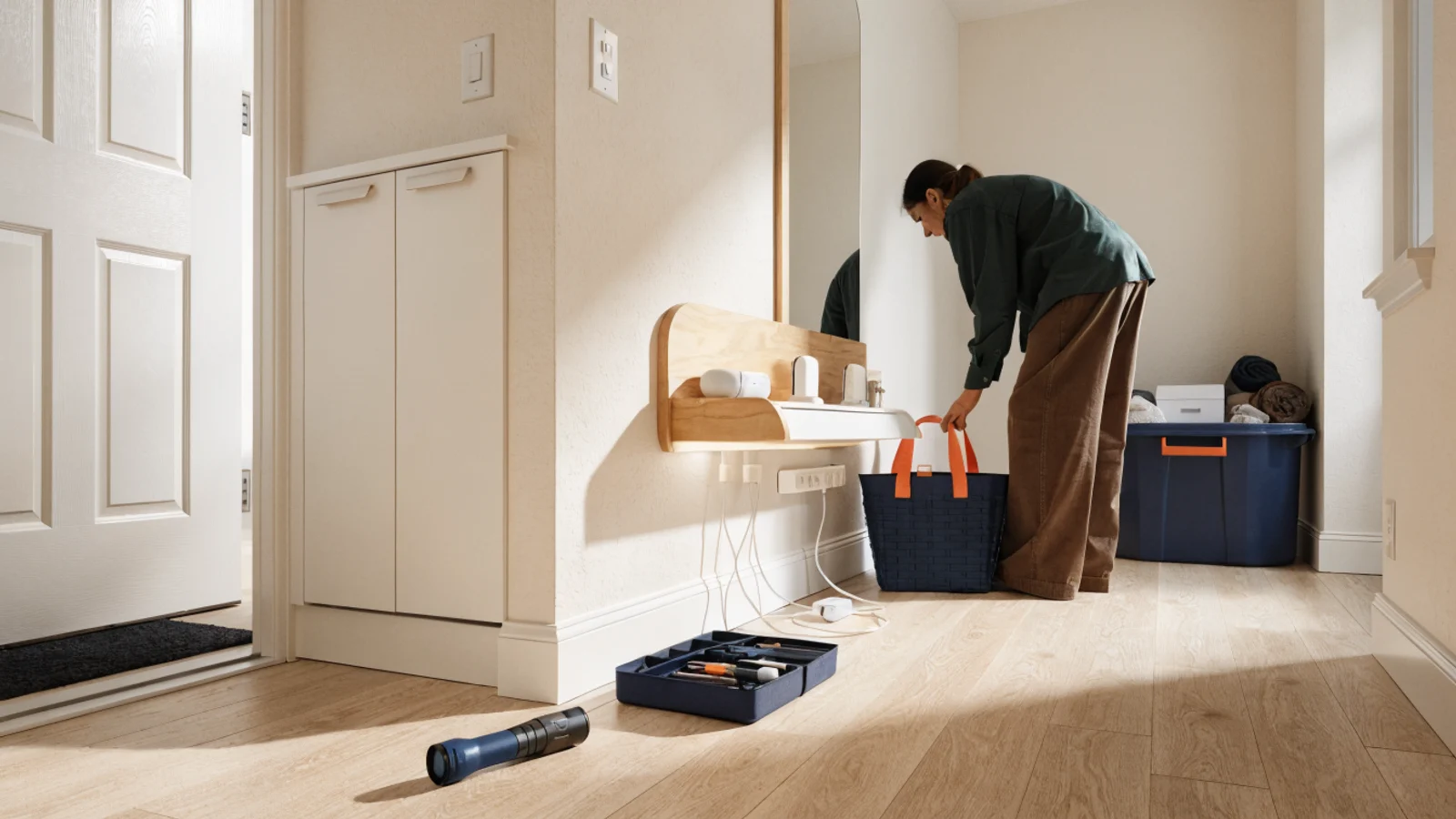
Review the plan after the routine has been used in ordinary conditions. If the new placement creates another obstruction, requires too much maintenance, or is ignored, revise the zone before adding more products.
The home utility room planner provides the primary next step for turning a room observation into a bounded system. Use it to capture the task, constraints, capabilities, current inventory, and handoffs before following relevant product lists or finders.
Limitations and uncertainty
Room plans cannot predict every household need. Available space, mobility, schedules, cooking practices, cleaning preferences, number of occupants, pets, children, and emergency requirements can change which zones are sensible.
Evidence also has limits. A source may confirm a safety principle or a qualification list, but it cannot settle fit, durability, ease of use, or value for a particular home without additional product-specific evidence and direct comparison.
Avoid treating a plan as permanent. Recheck it when a routine, room use, household need, or storage condition changes, and mark open questions instead of filling them with confident guesses.
Frequently Asked Questions
Should every room have its own utility products?
No. Keep a product in a room only when frequency, access, or safety makes local placement useful; shared tools can serve several zones.
Which room should I organize first?
Start where a frequent routine has the clearest repeated friction, consequence, or failed handoff rather than where a visual makeover looks easiest. A small, observable problem gives you a better test of the method.
How do I avoid buying duplicate products?
Map capabilities across rooms, record what is already owned, and decide whether moving one shared item is easier than storing and maintaining another. Add a duplicate only when the shared arrangement repeatedly disrupts the routine or cannot meet a relevant constraint.
How does the room planner lead to product choices?
It turns a missing room capability and its constraints into a bounded product family, which can then be checked against evidence and relevant site lists. This keeps product research downstream of the observed task rather than letting a product define the problem.
Review home utility products by room only after the routines and handoffs have been observed. This keeps each candidate connected to a declared task instead of an assumed room theme.
Treat the home utility products by room plan as a decision record, not as permission to fill every zone. Missing measurements, care information, or safety evidence remain reasons to pause.
Conclusion
A useful room plan connects tasks, zones, handoffs, capabilities, evidence, and reset actions. Treat home utility products by room as a way to make those decisions in order, starting with one repeated friction and buying only when the evidence-backed gap remains after simpler changes have been considered.