Use this home organization audit checklist to find the repeated household friction worth fixing before you buy another bin, rack, appliance, or organizer. The audit starts with what happens during a real routine, then connects the bottleneck to a capability and only afterward to a product family.
The goal is not a picture-perfect room. It is a home where frequent jobs require fewer searches, transfers, blocked movements, awkward reaches, and resets.
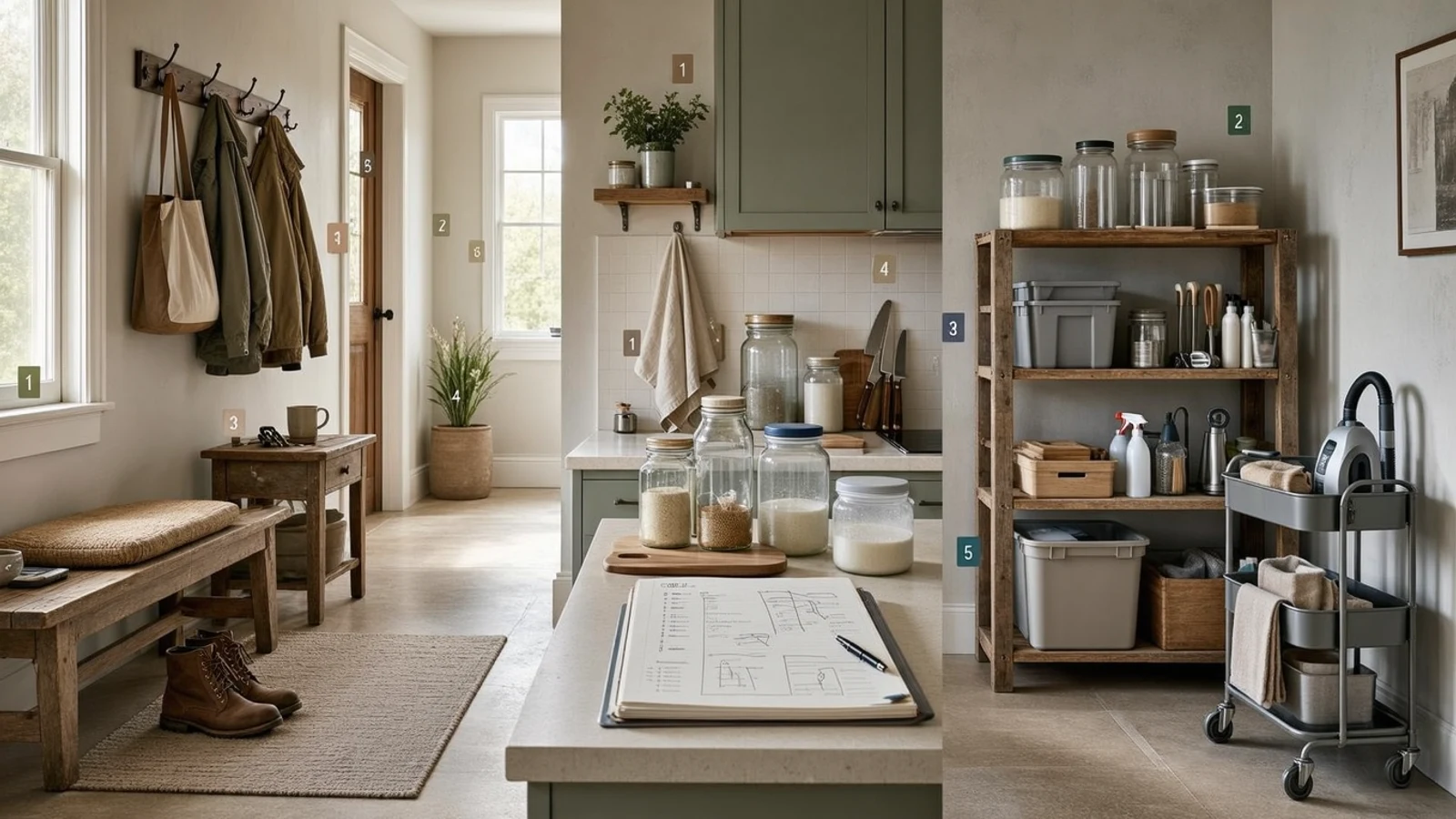
Table of Contents
- Define friction before organization
- Observe one complete routine
- Run the home organization audit checklist
- Choose a system, not a random product
- Apply the audit by situation
- Recheck the result
- Limitations and safety checks
- Frequently Asked Questions
- Conclusion
Define friction before organization
Household friction is a repeated obstacle between an intention and a completed job. It can be physical, such as carrying supplies between rooms, informational, such as not knowing where an item belongs, or sequential, such as moving three objects before reaching the one used every morning.
Clutter is sometimes the visible result, but it is not always the cause. A clear counter can still support a poor routine if the tools are stored far from the job, the cabinet is hard to open, or the setup must be rebuilt every day. An audit looks at action, frequency, and recovery rather than appearance alone.
Use five friction categories
Classify each observation as access, movement, preparation, cleaning, or reset friction. Access friction means the required item is hidden, too high, too low, or behind another item. Movement friction means the routine requires unnecessary trips, lifting, turning, or route conflicts.
Preparation friction appears when setup takes too long or needs several unrelated surfaces. Cleaning friction covers difficult-to-reach residue, too many loose parts, or supplies that are separated from the task. Reset friction is the effort needed to return the area to a usable state.
The Home Utility Planner turns these categories into its Home Friction Audit. You can complete one pass in about five minutes, then preserve uncertain areas as research gaps instead of accepting an instant shopping list.
Observe one complete routine
Choose a routine that occurs at least several times per week. Examples include packing a work lunch, preparing breakfast, leaving the house, cleaning the sink, sorting laundry, charging devices, or resetting a small workspace. Begin the observation before the first item is collected and end only when the area is reset.
Write each action as a verb: open, reach, move, search, carry, plug in, wash, dry, return. This creates a neutral sequence without assuming the solution. If another household member performs the routine differently, record that version separately.
Capture facts without performing for the audit
Do the routine normally. Count trips between zones, items moved temporarily, blocked openings, repeated searches, and surfaces used only as holding areas. Note where a person pauses because the next step or location is unclear.
The process resembles a structured workstation review: observe the actual task, equipment, arrangement, and user instead of judging one object in isolation. The OSHA workstation evaluation checklist addresses workplace ergonomics, not home organization, but its system-level approach is a useful model for careful observation.
Record the reset
Many organization failures appear after the main job. A product may make setup faster but create extra washing, drying, folding, charging, or component matching. Record how long the area remains unusable and whether the reset depends on one person remembering an unwritten rule.
For room-level analysis, the small apartment storage plan separates daily, weekly, and seasonal access. The door versus underbed storage comparison shows why retrieval frequency can matter more than maximum capacity.
Run the home organization audit checklist
Use a simple one-to-five score for frequency, effort, and consequence. Frequency asks how often the obstacle appears. Effort covers time, carrying, bending, cleaning, searching, and decision load. Consequence covers blocked access, missed tasks, food waste, safety concerns, or another routine being delayed.
Multiply the three scores only to rank observations within your home; the number is not a universal scientific measure. A daily low-effort annoyance may outrank a difficult task performed once a year. Keep safety-critical issues outside this convenience ranking and address them with appropriate guidance.
Define success before a solution
Write a measurable outcome for the highest-ranked bottleneck. Useful examples are one fewer trip, no items removed to reach the target, all lunch components in one zone, a clear door arc, or a reset that fits inside the routine. Avoid goals such as “look cleaner” unless visual order is the actual job.
Run the home organization audit checklist again with the intended outcome beside each step. This second pass separates capabilities from products: portable carry, divided storage, vertical access, built-in cooling, measured fit, easy-clean surface, or one-handed retrieval.
Choose a system, not a random product
A product family is a group of formats that can supply one capability. A system combines the required families for a complete situation, then marks useful options separately. This prevents an optional appliance from being presented as essential and prevents a missing required family from being hidden.
For example, a work-lunch system requires a way to portion and transport prepared food plus a way to carry temperature-sensitive food. A chopper, scale, or air fryer may help a specific routine, but each remains optional until the user’s steps show that capability is needed.
Start with compatibility
Before comparing products, record available width, depth, height, power, storage, carrying distance, cleaning method, and the people using the setup. The furniture fit measurement guide covers room and route measurements, while the cabinet organizer guide covers hinges, lips, pipes, and internal access.
Use the planner’s Systems mode when several families must work together. Use Life Goals mode when the starting point is an outcome such as saving meal-prep time, supporting a family routine, improving hygiene, or reducing clutter across several zones.
Require evidence before recommendation
Marketplace popularity can help identify established products, but it cannot establish dimensions, materials, capacity, safety, or compatibility. Keep current manufacturer specifications attached to every recommendation and preserve the date of volatile Amazon facts internally.
If a required product family has no evidence-backed recommendation, show the missing coverage. Available verified products can still appear as a partial starting point, but the interface should not pretend that the complete system is ready.
Apply the audit by situation
For a rushed morning, follow the route from waking to leaving. Look for items collected from several rooms, chargers or keys without a home, breakfast tools that compete for the same surface, and bags that must be unpacked before use. The system may involve entryway storage, meal transport, and a charging zone rather than one “morning routine” product.
For meal preparation, count ingredient retrieval, board changes, appliance setup, cooling, portioning, and cleanup. The air fryer finder can compare appliance formats after capacity and counter limits are known. The best air fryers guide explains why no basket or glass format is a universal winner.
Family and care routines
When several people share the job, record height, reach, reading, strength, and schedule differences. A system that works for one adult can fail when a child cannot return an item or another person cannot identify the intended location. Prefer visible, consistent rules over labels that only one person understands.
For hygiene routines, trace clean and dirty states separately. Identify where a tool dries, how contamination is limited, and whether the required supplies remain accessible. Product marketing should not replace applicable public-health or manufacturer care instructions.
Small-space routines
In a small room, one zone often supports several jobs. Record the changeover between work, eating, storage, and sleep, then rank the setup and reset burden. A folding or rolling product can help only when its stored footprint and deployment path fit the room.
Review the small-space product finder after identifying the job. It ranks formats by declared pressure points, but room measurements and current product evidence still control the final decision.
Recheck the result
After a change, repeat the original routine under normal conditions. Compare the number of steps, trips, searches, temporary moves, blocked openings, and reset actions. Keep the change only if the improvement is clear and does not move friction into another room or another person’s routine.
Do not add a second product automatically when the first change is incomplete. Check whether placement, an unclear rule, missing disposal, or an oversized inventory is the remaining cause. Sometimes the best next action is removing a step rather than adding storage.
Keep a decision record
Record the original bottleneck, selected capability, product family, constraints, evidence used, and the after-check result. This creates useful learning when traffic, clicks, and later feedback show which tools and recommendations help readers complete a task.
The reviews index contains product-specific evidence pages, and the editorial policy explains how manufacturer sources, marketplace snapshots, generated media, and affiliate relationships are handled. Use both before treating a recommendation as a guarantee.
Limitations and safety checks
This guide is a household planning method, not medical, occupational, accessibility, electrical, installation, or fire-safety advice. The U.S. Access Board route guidance and Ready.gov escape planning guidance provide authoritative context for clear paths, but the correct requirements depend on the setting and people involved.
Tall storage and televisions may need secure anchoring. Review the CPSC Anchor It guidance and current manufacturer instructions rather than relying on an organizer’s visual stability. Do not rank an urgent hazard below a convenience problem.
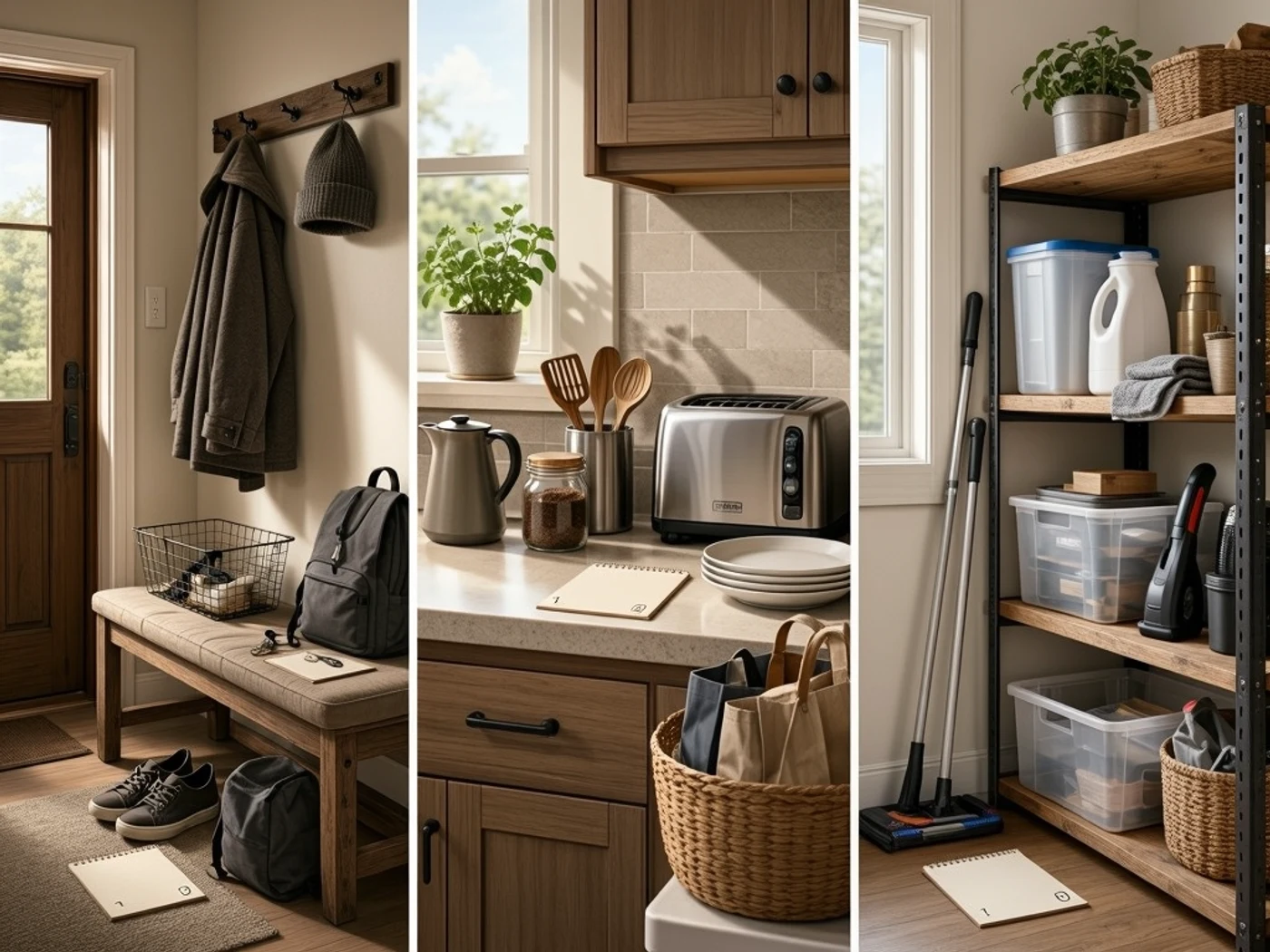
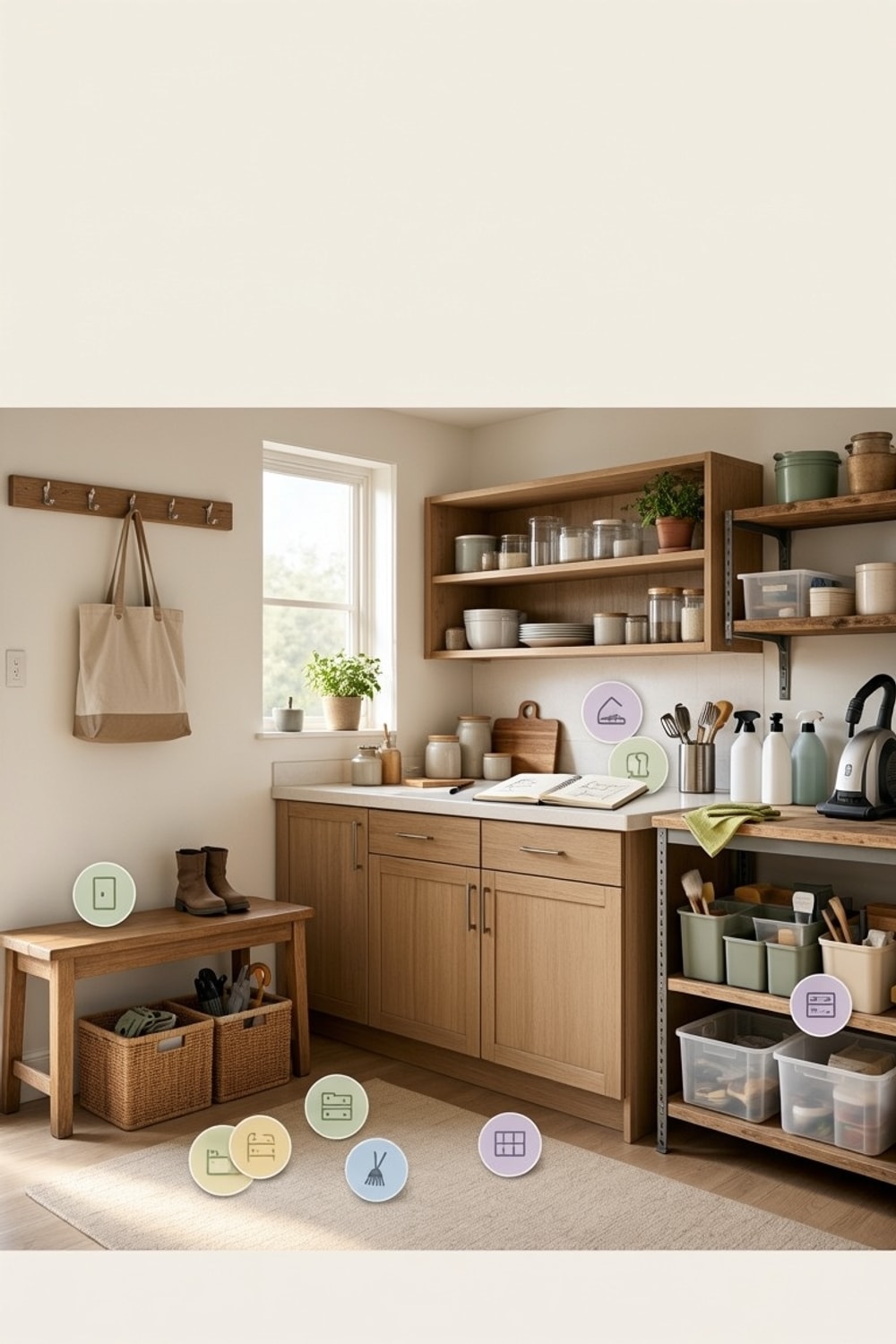
No household was physically audited for this article, and the generated images are editorial illustrations. The method can reveal patterns, but it cannot prove that a product will solve them or fit a specific home.
Frequently Asked Questions
How long should a household audit take?
A first pass can take five minutes for one routine. Observe several real repetitions before buying when the problem is complex, shared, or affected by different schedules.
Should I organize an entire room at once?
Start with one repeated job or bottleneck. A smaller boundary makes the before-and-after result easier to evaluate and reduces the chance of moving the problem elsewhere.
When should I buy a product during the audit?
Buy only after the job, constraints, required capability, available space, and success measure are clear. Keep a candidate pending when a critical manufacturer specification is missing.
How do I know whether the change worked?
Repeat the same routine and compare steps, time, searching, lifting, blockage, and reset effort against the original observation. Ask every regular user whether the new rule is understandable and sustainable.
Conclusion
Begin with one routine, record every action and reset, score the repeated bottlenecks, then define the capability required before looking at products. Use the planner to test fit, build systems, or map a life goal while leaving evidence gaps visible. A home organization audit checklist creates value when it replaces random purchases with a measurable before-and-after decision.