
A small apartment storage plan works best when it starts with pressure points rather than shopping. This seven-day method maps what blocks movement, where daily items land, and which belongings deserve vertical, hidden, flexible, or no storage at all.
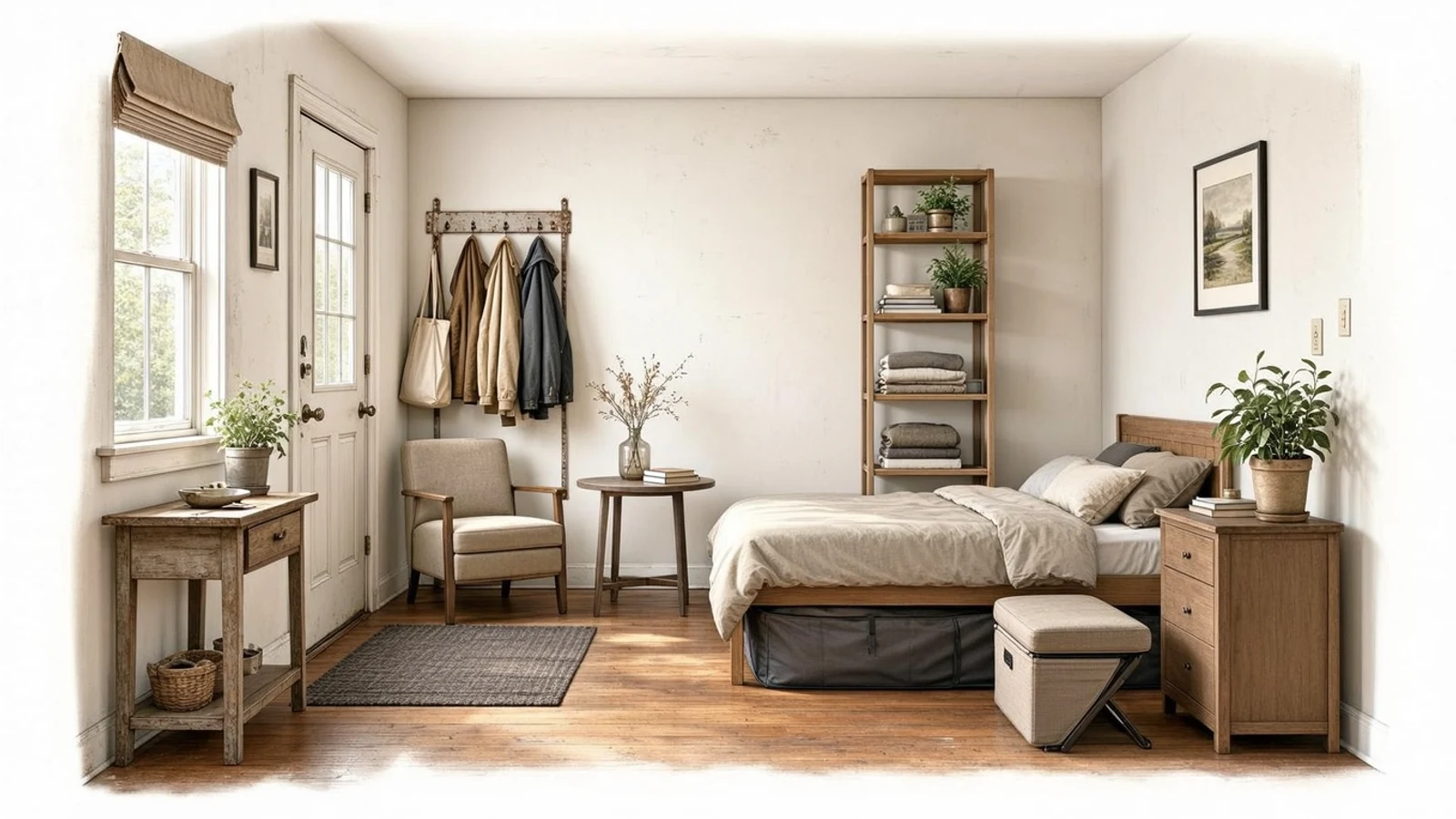
Table of Contents
- The seven-day pressure-point audit
- The room sequence
- Product roles and fit
- Safety, access, and seasonal storage
- The weekly reset
- Limitations
- Frequently Asked Questions
- Conclusion
The seven-day pressure-point audit
The first goal is not to make every surface empty. It is to identify repeated friction: keys without a landing place, laundry that gathers beside the bed, pantry goods that migrate to the counter, or cleaning supplies that block a cabinet door.
Day 1: Observe without correcting
Walk through the apartment at three ordinary times: before leaving, after returning, and before bed. Note items that are carried between rooms, piles that reappear, doors that cannot open fully, and anything placed on the floor because its assigned storage is inconvenient.
Use a simple list with four columns: item, current location, access frequency, and problem caused. Do not count every possession yet, because the useful question is whether the home lacks capacity, lacks a nearby home, or contains more of an item than the routine requires.
Days 2 and 3: Mark routes and access
Sketch the main paths from the entry to the living area, kitchen, bathroom, bedroom, and exits. Leave doors, windows, vents, radiators, electrical panels, and appliances usable. The U.S. Access Board’s accessible-routes guidance is a useful reference for thinking about clear travel routes, although an apartment’s legal requirements can vary by situation.
Then label belongings as daily, weekly, seasonal, archival, or release. Daily items should be closest to the point of use, while weekly items can live slightly farther away. Seasonal items can move to high, low, or concealed storage if they remain identifiable and dry.
Days 4 and 5: Measure the constraints
Measure the width, height, and depth of candidate locations, including clearance for doors, drawers, knees, outlets, and cleaning. For a shelf, measure the full footprint rather than relying on a nominal width. For under-bed storage, measure the lowest obstruction, not just the advertised bed height.
A useful small apartment storage plan records the maximum acceptable footprint before selecting a container. Write down whether a product must fold, roll, stack, close, or remain open. Those requirements prevent a low-cost purchase from becoming another obstacle.
Days 6 and 7: Assign homes and test retrieval
Give each recurring category one primary home and, if necessary, one overflow home. Put the most frequently used items between easy reach and eye level, less-used items above or below them, and fragile or private belongings in protected locations.
Test the proposed arrangement during a normal routine. If retrieving an item requires moving three unrelated objects, the location is probably too remote or too crowded. If a container is difficult to label or return, reduce the category before adding another container.
The room sequence
A room-by-room approach keeps the system connected to behavior. Start where clutter enters, then address the room that creates the most daily disruption.
Entry: stop the spread
Create a small landing zone for keys, bags, mail, shoes, and items that need to leave the apartment. The landing zone can be a tray, wall-mounted hook area, narrow shelf, or the top of a stable cabinet, provided it does not reduce the usable route.
Keep an outgoing-items basket separate from general storage. Its job is temporary: returns, library materials, packages, or items for another room. Empty it on a fixed day so it does not become a permanent mixed bin.
Kitchen: store by motion
Group items by the action that uses them: prep, cooking, eating, cleaning, and food storage. Keep daily dishes near the dishwasher or drying area, pans near the cooktop, and cleaning supplies where they can be reached without moving food.
Vertical shelf space can help when counters are crowded, but only if the unit fits safely and does not interfere with heat, water, or cabinet operation. A narrow adjustable shelf may be appropriate for a pantry corner, but it is not a substitute for checking the load, stability, and wall or floor condition.
Living room: make flexibility do work
Living rooms often need to serve as sitting, working, dining, and guest areas. Prefer furniture that performs a second function without requiring a complicated conversion. A folding ottoman can provide a seat or footrest and hold a limited category of soft goods, but it should not become an unmarked receptacle for everything.
The SONGMICS Mazie Collection folding storage ottoman is 12.2 by 16.1 by 12.2 inches and has a listed 286-pound load capacity. Its supplied snapshot lists a $18.69 price, 4.6 rating, and 2,015 reviews, verified July 13, 2026; those marketplace figures are dated signals, not proof of quality or fit.

Checked Jul 2026
SONGMICS Mazie Collection - Small Folding Storage Ottoman
A current winning product selected through the Home Utility research and qualification workflow.
- Best for
- Useful where a compact seat or footrest can also hold one defined soft-goods category.
- Know before buying
- Check the footprint, hinge or folding behavior, and whether the intended contents make the ottoman awkward to move.
Bedroom: use the bed perimeter carefully
Start with the closet before adding bins. Remove damaged hangers, group clothing by use, and place current-season garments where they are easiest to return. Slim velvet hangers can reduce wasted rail space, but they do not increase the closet’s structural capacity or solve overfilled shelves.
The Amazon Basics Slim Velvet Non-Slip Suit Hangers are supplied as a 30-pack. The snapshot lists a $16.19 price, 4.8 rating, and 233,879 reviews, verified July 11, 2026. These are marketplace snapshots rather than quality proof, and the practical fit depends on your rail width, garment weight, and available vertical clearance.

Checked Jul 2026
Amazon Basics Slim Velvet Non-Slip Suit Clothes Hangers, 30-Pack
A current winning product selected through the Home Utility research and qualification workflow.
- Best for
- A reasonable replacement option when bulky mixed hangers are consuming closet width.
- Know before buying
- Confirm that the slim profile and non-slip surface suit the garments you hang; do not overload the rod.
Bathroom and utility areas: contain the small repeaters
Bathrooms benefit from narrow categories: daily care, backup care, cleaning, and first aid. Keep medicines and potentially hazardous products according to their labels and away from children. A lidded box may hide visual clutter, but it can also slow access, so use it for backups rather than daily essentials.
In a utility closet, keep a clear distinction between active supplies and replacements. Store liquid products upright, inspect for leaks, and avoid placing heavy items where they can fall when a door opens. The CPSC’s AnchorIt.gov guidance explains why anchoring and tip-over prevention matter for furniture and storage units.
Product roles and fit
Products should answer a measured problem. The comparison below separates likely roles without treating ratings or prices as independent evidence of durability.
| Criteria | SONGMICS folding storage ottoman | Amazon Basics under-bed storage bags | Amazon Basics 4-Shelf Steel Wire Storage Shelves | Amazon Basics Slim Velvet Hangers |
|---|---|---|---|---|
| Role | Flexible living-room storage | Hidden seasonal storage | Vertical utility storage | Closet space management |
| Snapshot | $18.69; 4.6; 2,015 reviews | $17.09; 4.3; 15,547 reviews | $36.31; 4.6; 261,896 reviews | $16.19; 4.8; 233,879 reviews |
| Fit | Seat or footrest with one soft-goods category | Clean, dry clothing and blankets under a suitable bed | Measured pantry, closet, or utility footprint | Replacing bulky hangers on a suitable rod |
The Amazon Basics Under Bed Storage Bags are listed as an 18 by 42 by 6-inch, two-pack with clear windows and reinforced handles. The supplied snapshot lists $17.09, a 4.3 rating, and 15,547 reviews, verified July 13, 2026. Their fit depends on the bed clearance, zipper access, room humidity, and whether the contents are appropriate for fabric storage.

Checked Jul 2026
Amazon Basics Under Bed Storage Bags for Clothes and Blankets, 2-Pack
A current winning product selected through the Home Utility research and qualification workflow.
- Best for
- Best reserved for labeled seasonal clothes, spare bedding, or blankets that are clean and fully dry.
- Know before buying
- Measure clearance first; fabric bags are not a guarantee against moisture, pests, compression, or difficult retrieval.
The Amazon Basics 4-Shelf Steel Wire Storage Shelves measure 23.2 inches wide, 48 inches high, and 13.4 inches deep, with a listed 200-pound capacity per shelf. Its snapshot lists $36.31, a 4.6 rating, and 261,896 reviews, verified July 13, 2026. Treat the stated capacity as product information, not a reason to exceed the floor, shelf, or anchoring limits of your particular setup.

Checked Jul 2026
Amazon Basics 4-Shelf Steel Wire Storage Shelves
A current winning product selected through the Home Utility research and qualification workflow.
- Best for
- Potentially useful for a measured vertical zone in a pantry, closet, or utility area.
- Know before buying
- Confirm dimensions, leveling, stability, and any anchoring needs before loading; avoid blocking routes or equipment.
Safety, access, and seasonal storage
Clear paths are a storage requirement, not merely a visual preference. Keep exits and escape routes usable, avoid placing unstable furniture where it can obstruct a door, and make sure drawers or bins do not project into a walking path.
Practice the route you would use in an emergency and discuss alternatives with household members. Ready.gov’s home fire escape guidance can help structure that conversation. Storage should never require moving a pile before reaching an exit.
For textiles, use clean, dry, breathable conditions and avoid treating a plastic bag as preservation. The Smithsonian Institution’s antique-textile storage guidance provides conservation-oriented considerations; ordinary household storage may need different handling, especially for valuable, historic, or fragile materials.
A useful small apartment storage plan also includes a release lane. Place donations, recycling, returns, and repair items in separate temporary containers, then assign each a deadline. If an item repeatedly waits for a repair that never happens, its storage cost is part of the decision.
The weekly reset
Set one short reset each week rather than relying on a major seasonal overhaul. Return displaced items, empty the outgoing basket, check the floor around furniture, and review anything that has become a mystery pile.
Every month, inspect one category for duplicates and one storage product for fit. If a container is empty, damaged, difficult to access, or holding unrelated categories, remove it or repurpose it. The system should become simpler as it learns from actual use.
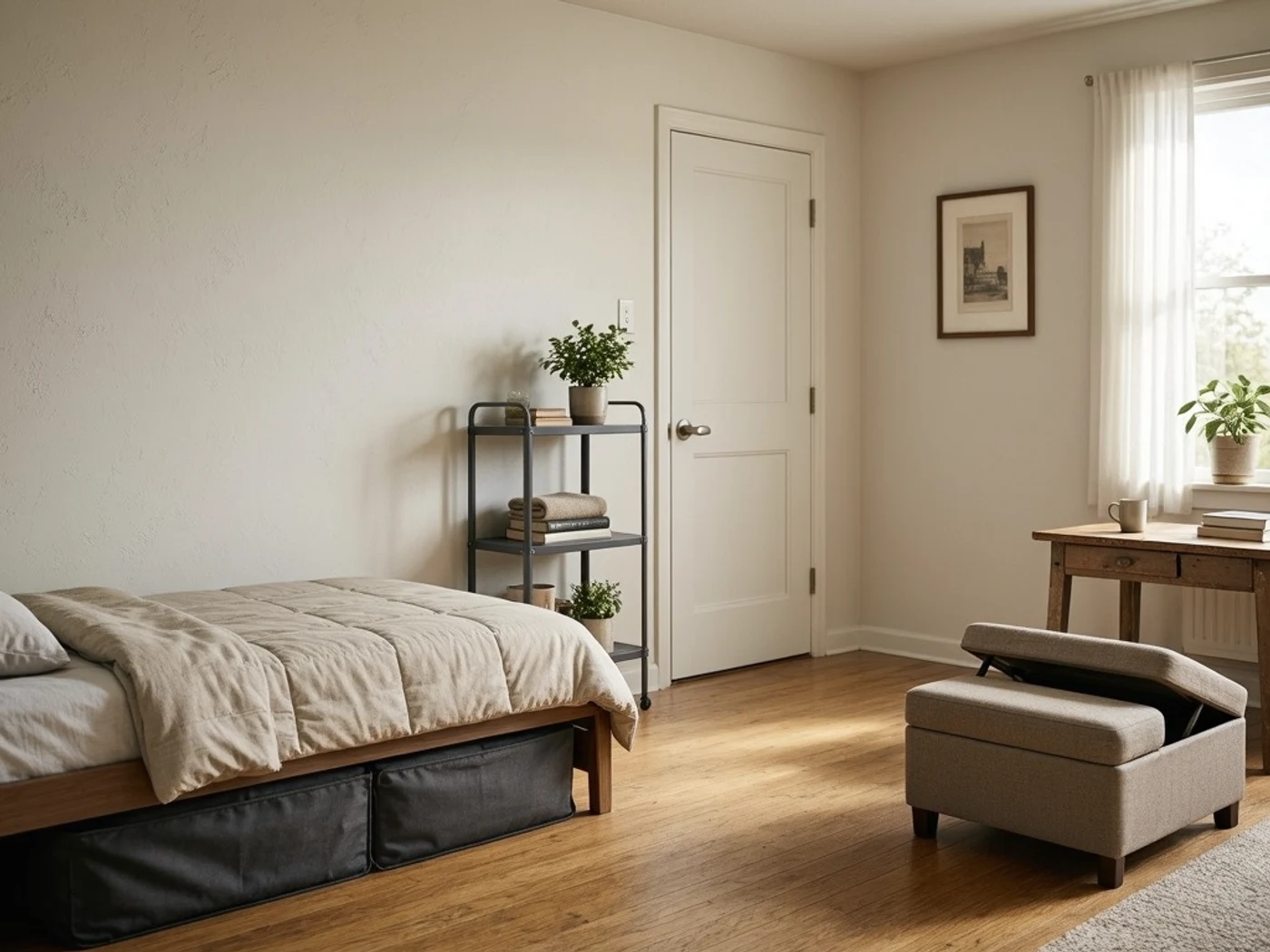
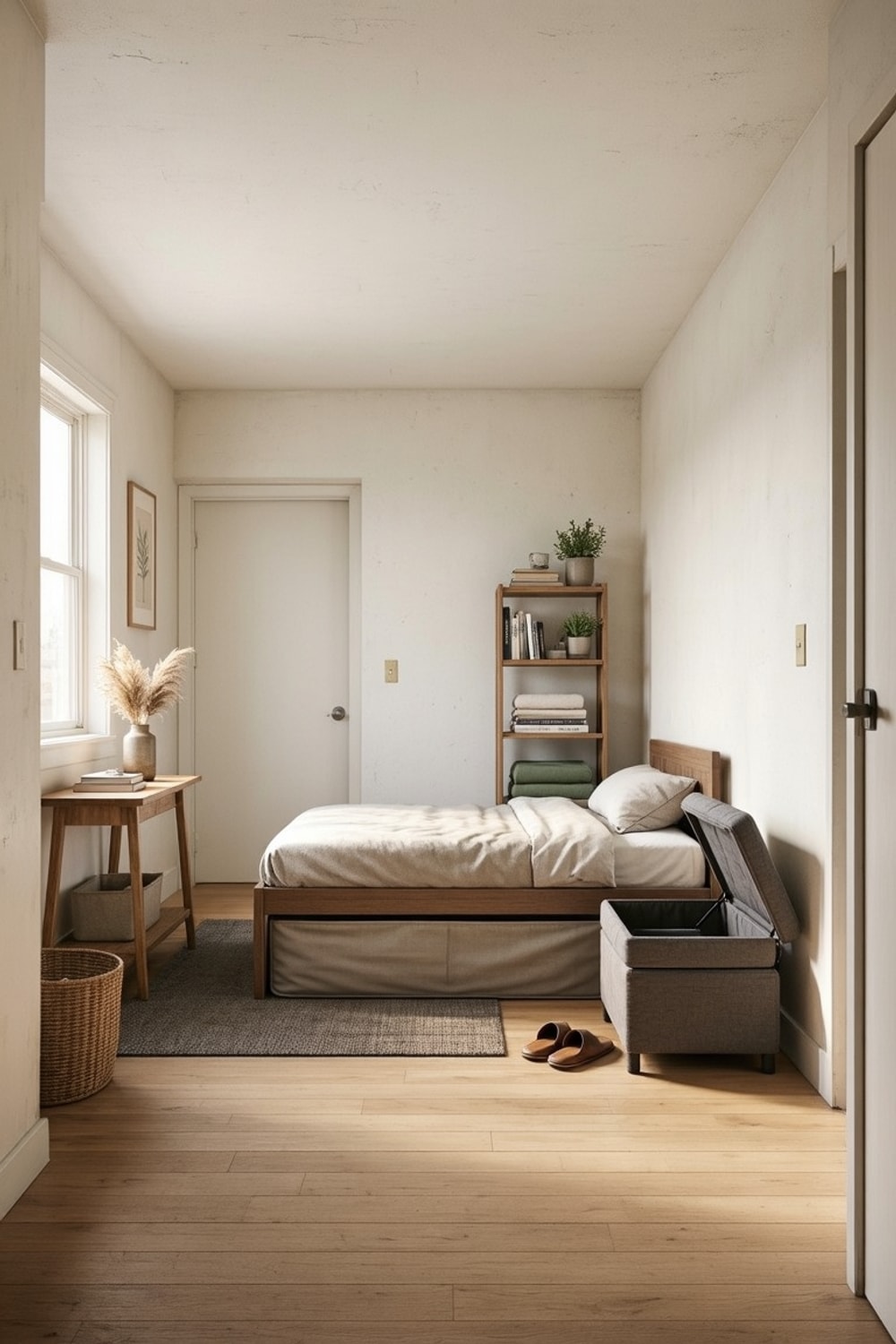
For more product-led options, compare the best small-space products guide and use the small-space product finder after measuring. Browse the small-space living category, storage-solutions category, and reviews archive for additional context. Product imagery in the cards uses retrieved Amazon imagery, while the three images in this guide are AI-generated editorial illustrations, not official product photography. Review how evidence and affiliate relationships are handled in the editorial policy, and see the Amazon Basics storage cubes review for a more focused product discussion.
Limitations
This guide does not inspect your apartment, verify dimensions, assess wall construction, or determine local building, accessibility, fire, lease, or landlord requirements. Product prices, ratings, and review counts are dated marketplace snapshots verified on the dates shown; they are not quality proof and can change.
The supplied product information does not establish long-term durability, noise, odor, moisture resistance, or performance in your particular room. Confirm current specifications, measurements, return terms, and safety instructions before purchase, and do not anchor or modify a product unless the manufacturer and property conditions permit it.
Frequently Asked Questions
How do I begin a small apartment storage plan?
Track where items collect for seven days, then solve the most disruptive pressure points before buying products. Start with the area that causes repeated friction rather than the room that looks most cluttered.
How much storage should go in a walkway?
Keep walkways clear and use only storage that stays outside required routes, doors, and escape paths. Measure the usable route after furniture, bins, and open doors are accounted for.
Are under-bed bags suitable for everything?
They are best for clean, dry, infrequently used soft goods, not damp items, valuables, or delicate textiles without suitable protection. Check the clearance and retrieval path before placing anything beneath the bed.
When should I discard or donate an item?
Release items that are duplicated, damaged beyond practical repair, unused for a meaningful period, or costly to store relative to their value. Set a deadline for uncertain items so they do not remain in indefinite overflow.
Conclusion
The plan is a repeatable loop: observe, measure, assign, test, and release. Begin with the pressure point that disrupts daily life, choose only a product that fits the measured role, and review the arrangement after a week. That turns a small apartment storage plan into a maintainable apartment organization system rather than a collection of containers.